
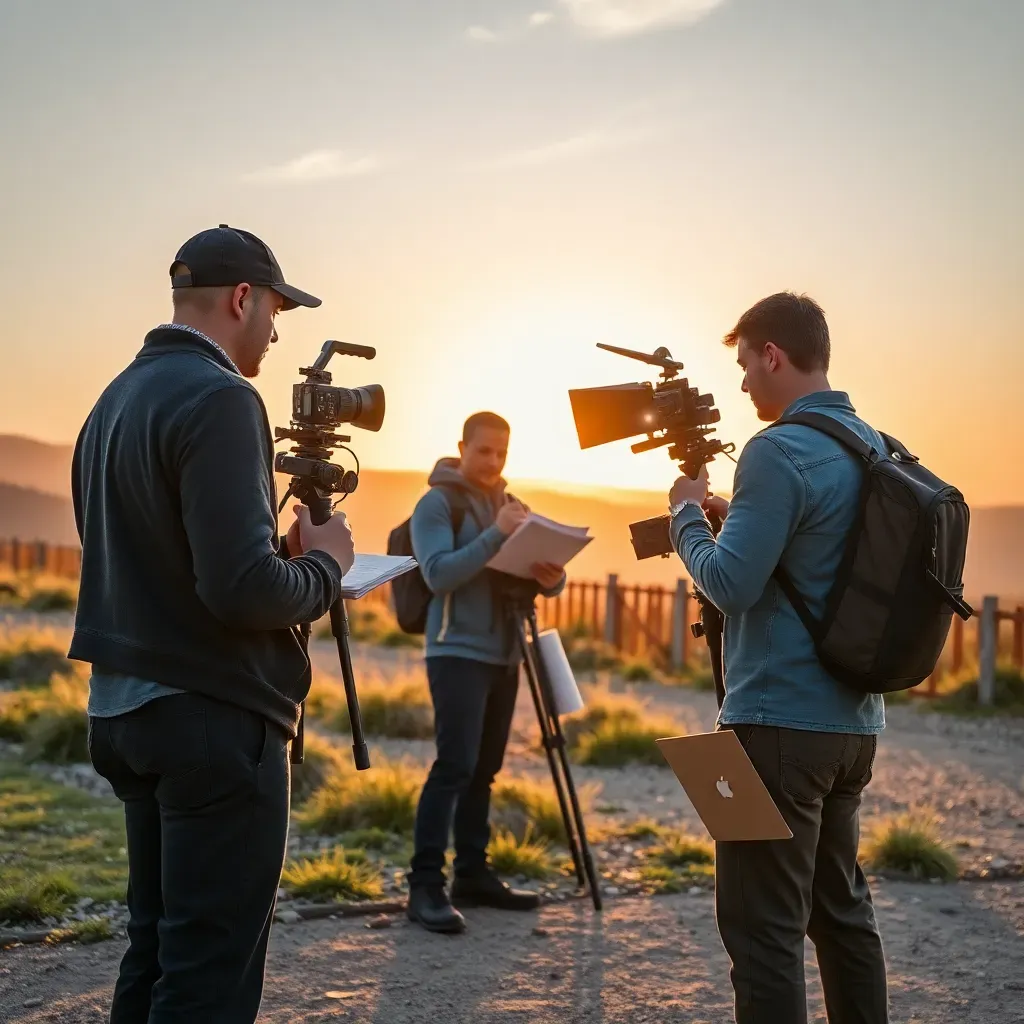
Filming in Auckland: Permits, Studios & Production Logistics
From Screen Auckland permits and Henderson stages to volcanic crater rims and Hauraki Gulf marine units — everything international productions need to plan a shoot in Tāmaki Makaurau Auckland
Filming in Auckland. Tāmaki Makaurau, the city of a thousand lovers — is one of the most in practice efficient production bases in the Asia-Pacific. Auckland pairs a deep crew base built on two decades of inbound feature work with a permit landscape set up by Screen Auckland inside Auckland Council. A geographic spread (volcanic cones, two harbours, 50+ Hauraki Gulf islands, sub-tropical rainforest within 40 minutes of the CBD) that no other New Zealand city can match in a single shoot day. This guide walks through what global teams actually need to know to plan a production in Auckland: where to file permits. This studios match which formats, which neighbourhoods and natural features deliver which looks, when to shoot, what the New Zealand Screen Production Rebate brings to the budget, and how lead times shape your schedule. We work the Auckland Council film office, the harbourmaster, the Department of Conservation, and the Auckland studio and crew rosters each week, so the focus here is operational, not editorial. Use it as a hub — each section links out to a deep-dive guide for the area you need to plan around.
As Fixers in New Zealand, we bring local expertise to international productions filming in New Zealand. Our team's deep knowledge of local regulations, crew networks, and production infrastructure ensures your project runs smoothly from pre-production through delivery.
ACT 01
Why Auckland for Production
Industry Depth, Infrastructure, and the Looks Producers Come For
Auckland is the operational centre of New Zealand audiovisual production. The reasons global teams keep choosing it for filming in Auckland go well beyond the postcards — it is the only city in the country that combines a major studio campus, a top-tier crew base, full post-prod infrastructure, and a one-hour drive radius that takes you from CBD glass-and-steel to volcanic rim, black-sand surf coast, native rainforest, and offshore islands.
- New Zealand hosts 30+ major global shoots a year, with the majority crewed and based out of Auckland
- NZFC, Screen Auckland, and the 20–40% New Zealand Screen Production Rebate sit within a single ride across the city
- Crew rosters cover English, Te Reo Māori, Mandarin, Korean, Japanese, and increasingly Spanish and Hindi for inbound co-productions
- Volcanic cones, two harbours, native bush, and modern skyline all sit inside one shooting day
Industry Depth and the Auckland Production Ecosystem
Auckland film production runs on a tight, mature ecosystem. The New Zealand Film Commission (NZFC) sets national policy and administers the New Zealand Screen Production Rebate. Screen Auckland — the city's screen office, sitting inside Tātaki Auckland Unlimited — handles permits, location liaison, and council approvals across the wider region. Major TV networks (TVNZ, Sky NZ, Three) and global streamers (Netflix, Amazon, Disney+, Apple TV+) all run commissioning and production work through Auckland-based teams. That density means crew, post houses, gear rental, insurance, customs brokers, and entertainment counsel all operate within the same metropolitan footprint — mostly within a 30-minute drive of the central city. For inbound shoots, this translates to fewer hand-offs and shorter pre-production cycles than in cities where the production stack is split across many regions.
Studio and Stage Infrastructure
The Auckland studio belt. Auckland Film Studios in Henderson, Studio West (now operating across the western suburbs), and the many build stages used by major series shoots — gives the city more than 8,000 m² of soundstage capacity within 30 minutes of the CBD. While Stone Street Studios in Wellington and Park Road Post (Wētā) stay the country's flagship facilities for Lord of the Rings-scale builds, Auckland's stages are where most week-in, week-out long-form drama and commercial work actually shoots. Backlot space at Auckland Film Studios, water tanks, and a steady pipeline of build crews and art departments are all ready without leaving the metropolitan area.
Crew, Talent, and Language Coverage
Auckland crews are deep in each department after two decades of non-stop global work — from The Lord of the Rings and The Hobbit through Avatar: The Way of Water and Mission: Impossible. Dead Reckoning. Cinematographers, gaffers, key grips, sound mixers, art directors, costume designers, hair and makeup artists, VFX supervisors, and stunt coordinators are ready at rates set by the New Zealand Film and Video Technicians' Guild and the Screen Industry Workers Act framework. English is the working language on each set, Te Reo Māori protocol and translation are standard for shoots touching Māori land or stories, and Auckland is the easiest New Zealand city to source bilingual second units for shoots running in Mandarin, Cantonese, Korean, or Japanese. Talent agencies cluster in the central suburbs. Casting directors here handle global SAG and Equity-style negotiations as a matter of course.
Signature Visual Looks
The visual reasons producers come to Auckland are well-known: the Waitematā Harbour and Sky Tower for modern setting up shots, Mt Eden and One Tree Hill (Maungakiekie) for volcanic-cone interiors and panoramic city beats, Rangitoto Island for primal volcanic landscape within a 25-minute ferry ride, the Waitākere Ranges and Piha Beach for native rainforest and dramatic black-sand coast, Waiheke Island for vineyard and Mediterranean-look exteriors, and the Britomart and Wynyard Quarter precincts for warehouse-conversion modern interiors. Each of these is briefed in detail below, with guidance on how shoot in Auckland workflows actually clear them.
ACT 02
Filming Permits in Auckland
Screen Auckland, the Harbourmaster, and the Permit Landscape
Auckland filming permits are set up by Screen Auckland inside Tātaki Auckland Unlimited, working in partnership with Auckland Council, Auckland Transport, the harbourmaster, and the Department of Conservation. This section gives you the operational summary — for the full step-by-step on records, fees, and edge cases, see our deep-dive guide.
- Screen Auckland is the single entry point for council land — parks, reserves, streets, beaches, and volcanic cones (tūpuna maunga)
- Auckland Transport handles road closures, parking suspensions, and any work affecting traffic lanes
- The harbourmaster sets up Waitematā and Manukau harbour shoots and Hauraki Gulf marine permits
- Tūpuna Maunga Authority co-governs filming on Auckland's volcanic cones (Mt Eden, One Tree Hill, North Head)
- Department of Conservation handles Waitākere Ranges, Rangitoto, Motutapu, and other public conservation land
Screen Auckland and Council Land
Screen Auckland is the single entry point for most public-domain filming in the Auckland region. They handle requests for streets, parks, reserves, beaches, council-owned buildings, and the city's high-profile public spaces (Aotea Square, Britomart precinct, Wynyard Quarter, the Viaduct Harbour). Standard street shoots with a small footprint — handheld, no truck, no road impact — are mostly clearable in five to ten working days. Larger setups with full lighting packages, power packs, picture cars, or base camp extend the lead time to two to three weeks and trigger Auckland Transport planning. Screen Auckland reviews shoot synopses, neighbourhood impact, and the production's local representative before issuing the location agreement and any associated traffic management plan.
Auckland Transport and Traffic Coordination
Anything that affects road traffic, needs a parking suspension, or involves stunts, weapons, pyrotechnics, drones, or large crowd scenes routes through Auckland Transport on top of the Screen Auckland permit. CBD road closures around Queen Street, the waterfront, or Karangahape Road are in tech possible but need the longest lead times in the city — three to six weeks is realistic, and some axes are simply not closable during peak commute, cruise-ship arrivals, or major event windows (America's Cup legacy events, Auckland Marathon, Pasifika Festival). Drone operations need a Civil Aviation Authority Part 102 operator and may need extra clearance for flights near the Auckland Airport way corridor or above 120 metres above ground level.
Tūpuna Maunga, Conservation Land, and the Harbour
Filming on Auckland's volcanic cones. Mt Eden (Maungawhau), One Tree Hill (Maungakiekie), North Head (Maungauika), Mt Victoria (Takarunga) — is co-ruled by the Tūpuna Maunga Authority alongside Auckland Council. These permits respect the cones as sites of cultural weight to mana whenua, lead times run two to four weeks, and approvals are conditional on no driving on the cone, no use of stakes in the soil, and observance of cultural protocol where needed. Waitākere Ranges Regional Park, Rangitoto Island, Motutapu, and other Department of Conservation land follow DOC's filming permit process — three to six weeks lead time, conservation-impact review, and concession fees scaled to crew size and impact. Hauraki Gulf marine shoots route through Auckland Council's harbourmaster and may also need Maritime New Zealand sign-off for larger vessel movements. For a complete walkthrough of permit types, fees, records, and rejection-recovery tactics, see our New Zealand permit deep-dive at /blog/filming-permit-city-guide/.
ACT 03
Studios in Auckland
Auckland Film Studios, Stone Street, Park Road Post, and the Wider Network
Auckland-based shoots draw on a national studio network. Auckland Film Studios sits in Henderson and handles the bulk of week-in, week-out work, while Stone Street Studios and Park Road Post (Wētā) in Wellington stay the country's flagship facilities for the largest global shoots. The lineup below is a working summary — the full sourcing guide with stage dimensions, ceiling heights, water tank specs, and virtual production volumes lives in our dedicated studios article.
- Auckland Film Studios (Henderson) — the city's primary studio campus, used for global features, series, and commercials
- Stone Street Studios (Wellington) — the country's flagship complex, home to Wētā and Lord of the Rings / Avatar work
- Park Road Post (Wellington) — Academy Award-winning post-prod facility, shared by Auckland shoots
- Build stages and warehouse conversions across West and South Auckland — flexible mid-size space for commercials and music videos
Auckland Film Studios — Henderson
Auckland Film Studios in Henderson is the city's primary purpose-built film studio. Many soundstages, a backlot, production offices, art-department workshops, and a water tank sit on a single campus 25 minutes west of the CBD. It has hosted shoots across long-form drama, global feature work, and high-end commercial work for two decades. For inbound shoots running long-form drama or tight series with Auckland-based talent, Henderson is the default first call when stage-to-location turnarounds need to stay under an hour and when the production base needs to coexist with the city's surf coast, native rainforest, and West Auckland location pool.
Stone Street Studios and Park Road Post — Wellington
For shoots at the largest scale. Lord of the Rings, The Hobbit, Avatar: The Way of Water, and the upcoming Avatar sequels — Stone Street Studios in Wellington stays the country's flagship facility. Five purpose-built stages, the adjacent Wētā Workshop, and Park Road Post for picture and sound finishing put the largest global shoots on a single Wellington campus. Auckland-based shoots often send picture and sound work down to Park Road Post. Many crews split prep between the two cities. Internal flights between Auckland and Wellington run each 30 minutes during the working day, so the two-studio model is in practice manageable when scale demands it.
Build Stages and Warehouse Conversions
Beyond the dedicated studios, Auckland's commercial and music-video production scene draws heavily on warehouse conversions across Penrose, Onehunga, East Tāmaki, and the wider South Auckland industrial belt. These spaces give shoots mid-size stage volumes at competitive day rates, with on-site parking and loading that central CBD locations cannot give. Art departments, prop houses, and gear rental cluster in the same industrial belt. This keeps build-day logistics inside one tight geography.
Equipment, Lighting, and the Rental Side
Auckland's gear rental market. Panavision New Zealand, Rocket Rentals, Portsmouth Rentals, and the Wētā gear pipeline — covers the full range of camera, lighting, grip, and pro gear used by global shoots. For shoots building bespoke stages or running blue/green-screen work without committing to a full Auckland Film Studios footprint, several of these vendors give flexible package deals that bundle stage, gear, and crew. For full stage matrices, daily rates, and the stages best suited to virtual production and LED-volume work, see our Auckland studios sourcing deep-dive at /blog/production-studios-city/.
ACT 04
Locations in Auckland
The Visual Categories That Bring Producers to the City
Auckland's strength as a location city is the geographic variety inside a one-hour drive radius — volcanic cones, two harbours, native rainforest, black-sand surf coast, and modern skyline all sit inside one shooting day. The types below cover most of what global shoots request — for the operational scout files (best times of day, light, foot traffic, permit difficulty), see our Auckland location scouting guide.
- Waitematā Harbour and the Sky Tower for modern setting up geometry
- Volcanic cones — Mt Eden (Maungawhau), One Tree Hill (Maungakiekie), North Head — for panoramic city beats and crater interiors
- Rangitoto Island for primal volcanic landscape, 25-minute ferry from downtown
- Waitākere Ranges and Piha Beach for native rainforest and dramatic black-sand coast
- Waiheke Island for vineyard, Mediterranean-look exteriors, and golden-hour beach work
- Britomart, Wynyard Quarter, and the Viaduct for warehouse-conversion modern interiors and waterfront modern
- Karangahape Road and Ponsonby for street-level urban character and inner-suburb residential
- Auckland Domain, Cornwall Park, and the city's Victorian park network for green-canopy and period-friendly exteriors
The Harbour, the Sky Tower, and the Modern City
The Waitematā Harbour, the Sky Tower, the Harbour Bridge, and the Viaduct precinct give Auckland its signature modern setting up geometry — the look that defines most inbound feature and series setting up sequences. Wynyard Quarter and Britomart, both reclaimed waterfront precincts redeveloped for the 2011 Rugby World Cup and the 2021 America's Cup, deliver clean modern build style, exposed-warehouse interiors, and walkable cinematic geography in a five-minute radius. The CBD itself — Queen Street, Aotea Square, Vulcan Lane — gives street-level density. But tourist and pedestrian traffic mean early-morning shoot windows (5–9 AM) are mostly the operational answer.
Volcanic Cones, the Waitākere Ranges, and the Surf Coast
Auckland sits on top of a dormant volcanic field of around 50 cones. Several — Mt Eden, One Tree Hill, North Head, Mt Victoria — are easy to reach filming locations under the Tūpuna Maunga Authority's framework. Their summit panoramas and crater interiors are unique to the city. The Waitākere Ranges Regional Park, 40 minutes west of the CBD, gives shoots native rainforest, kauri canopy, and dramatic ridge lines, while Piha, Karekare, and Bethells (Te Henga) on the surf coast deliver the black-sand beaches and rugged Tasman Sea coast that have defined Auckland-shot films from The Piano onwards. DOC permits and Waitākere Ranges Local Board protocols apply — lead times run three to six weeks for substantial shoots.
Waiheke Island, the Hauraki Gulf, and Marine Logistics
Waiheke Island, a 40-minute Fullers ferry from downtown Auckland, gives shoots vineyards, Mediterranean-look beach exteriors, and rural luxury locations within a same-day return. The ferry constraint matters for shoot logistics — car bookings on the Sealink car ferry need to be locked weeks ahead during the December-to-February peak. Crew shuttle scheduling around the passenger ferry timetable is a standard part of any Waiheke shoot day. Beyond Waiheke, Rangitoto, Motutapu, Tiritiri Matangi, and Great Barrier Island (Aotea) widen the location pool further into the Hauraki Gulf — and unlock the marine permits needed for vessel-based shoots, underwater units, and helicopter-to-boat aerial work. The harbourmaster, Maritime New Zealand, and DOC are the three OKing authorities for most Hauraki Gulf marine work. For the full taxonomy with permit difficulty ratings and shoot-window guidance, see /blog/commercial-shoot-locations-city/ and our /services/pre-production/location-scouting-services/ page.
ACT 05
Seasonal Considerations for Filming in Auckland
Best Months, Weather Risks, and Event Blackouts
When you shoot in Auckland matters almost as much as where. The city sits in the Southern Hemisphere subtropics, has a clear summer peak window, and a calendar of festivals and sporting events that compress availability. Plan against this calendar from the first scout.
- Best operational months: December–February (summer peak, longest daylight) and February–April (settled autumn light)
- Winter (June–August) brings shorter days (sunset around 17:15 in June) and unsettled weather — but quieter permits and lower crew demand
- Spring (September–November) gives unpredictable wind and rain alongside the year's most dynamic light
- Event blackouts: Auckland Anniversary regatta (late January), Pasifika Festival (March), Auckland Marathon (October), and any America's Cup or major rugby fixture window
Weather, Light, and the Production Calendar
Auckland's subtropical maritime climate is mild but never reliable. Summer (December through February) gives the longest practical shoot days — 14+ hours of usable daylight, with sunset stretching past 20:30 in late December — and the warmest water temperatures for marine and beach work. February and March deliver the year's most settled weather and the cleanest light quality, with calm harbour conditions and lower humidity than midsummer. May through August compresses shoot days to nine to ten hours of usable light and brings persistent westerly fronts that suit some looks (moody coast, gritty drama) and frustrate others (high-key fashion, anything that needs a clean blue sky). Auckland's reputation for four seasons in one day is well-earned — each outdoor shoot needs a wet-weather cover plan from the call sheet up.
Summer Peak, Crew Demand, and Hotel Inventory
December through February is Auckland's summer peak. Global shoots, domestic series, and the heavy commercial and music-video calendar all compete for the same crew, gear, and studio inventory. Top-tier department heads book six to nine months ahead for the summer window, hotel rates in the CBD spike around the New Year and Auckland Anniversary regatta, and Hauraki Gulf marine permits and vessel charters need to be locked well in advance. The trade-off is the year's longest daylight, the most reliable weather, and the lowest wind risk for marine and aerial work. Productions that can shift principal photography into late February through April mostly pay less for the same crew and have an easier permit window.
Event Blackouts and Cultural Calendar
Several windows in the Auckland calendar effectively remove parts of the city from the production pipeline. The Auckland Anniversary regatta (late January) closes the inner Waitematā Harbour for racing and saturates the waterfront with spectator infrastructure. Pasifika Festival (March) and the Lantern Festival lock down Western Springs and Auckland Domain respectively. Auckland Marathon (late October) closes Tāmaki Drive and waterfront axes. Any America's Cup defence or major rugby fixture (All Blacks tests at Eden Park) pulls hotel inventory and security capacity. Major hui at Bastion Point or Ihumātao. Tangihanga affecting marae access, can also reshape what is in practice ready on short notice — a Te Reo Māori-fluent fixer is key for handling these. See our /locations/auckland/ landing page for an overview of how we structure scouting around these constraints.
ACT 06
Crew Availability and Costs in Auckland
Lead Times, Day Rates, and the New Zealand Screen Production Rebate
Auckland gives some of the Asia-Pacific's deepest crew availability for global shoots and one of the world's most competitive screen rebates structures. Plan crew bookings against the city's calendar and price the New Zealand Screen Production Rebate into the budget from day one.
- DOPs, key grips, gaffers, and sound mixers: 6–12 weeks lead time for top tier during summer peak, 2–4 weeks for mid-tier off-peak
- Production designers and costume designers: 8–16 weeks for prep-heavy global shoots
- Stunt coordinators, SFX supervisors, and underwater units: 8–16 weeks for full-scale work, longer if shared with Wellington shoots
- NZSPR (New Zealand Screen Production Rebate) returns 20% on qualifying NZ spend, with a 5% uplift ready for qualifying shoots
Lead Times for Booking Key Roles
For a typical inbound feature or six-episode series shooting in Auckland, plan eight to twelve weeks minimum from script lock to first day of principal photography just for crew booking — and stretch that to four to six months if you are shooting in the December-to-February summer peak. Director of photography, production designer, stunt coordinator, and 1st AD are mostly the binding constraints — top-tier Auckland talent splits time between local feature work, inbound global shoots, and Wellington-based shoots. Mid-tier department heads and the bulk of crew (camera assistants, electricians, grips, sound utilities, costume, hair and makeup) are mostly ready with two to four weeks notice outside the summer peak. Commercials run on tighter schedules — typical lead time for a five-day Auckland commercial is two to three weeks for crew, one week if the agency has standing relationships.
Day Rates and Budget Anchors
Auckland crew day rates follow the Screen Industry Workers Act framework. The New Zealand Film and Video Technicians' Guild rate guidance. In practice, expect roughly NZD 600–900/day for camera assistants and electricians, NZD 1,000–1,500/day for gaffers and key grips, NZD 1,800–3,000/day for DOPs, NZD 2,500–4,500/day for production designers, and significantly higher for global name talent on negotiated contracts. Add 8% holiday pay and 3% KiwiSaver employer inputs on top of each line — these are statutory and need to be in the budget from day one. Gear rental, location fees, and base-camp logistics are mostly lower than London and meaningfully lower than Sydney for equivalent specs. This is one reason Auckland has stayed competitive for inbound work alongside the rebates.
NZSPR and the Tax Incentive Picture
The New Zealand Screen Production Rebate (NZSPR) returns 20% of qualifying New Zealand spend for global shoots, with an extra 5% uplift ready for shoots that meet a Significant Economic Benefits Test (mostly reserved for the largest inbound work). Eligibility needs a minimum NZD 15 million qualifying spend for global features and series, with lower thresholds for post, digital and visual effects-only work. For a production with a NZD 30 million Auckland-based shoot, NZSPR can return NZD 6–7.5 million against New Zealand crew, locations, post, and gear costs. The full mechanics, application timeline, and Significant Economic Benefits Test records are covered in our /blog/film-tax-incentives-guide/ — and our team can walk you through whether your production qualifies before you commit to an Auckland production base. To start an Auckland production conversation, contact us at /contact/ with your script status, shoot window, and budget envelope.
ACT 07
Common Questions
How long do filming permits take in Auckland?
Screen Auckland typically processes standard street and reserve filming permits in five to ten working days. Larger setups with lighting, generators, picture vehicles, or base camp extend to two to three weeks because they require Auckland Transport coordination and a traffic management plan. Volcanic cones (Mt Eden, One Tree Hill, North Head) run two to four weeks under the Tūpuna Maunga Authority. Department of Conservation land — Waitākere Ranges, Rangitoto, Motutapu — runs three to six weeks. Hauraki Gulf marine permits routed through the harbourmaster and Maritime New Zealand take three to six weeks, longer for vessel-heavy shoots. Always build buffer for the December-to-February summer peak and for major event windows.
Can I shoot in public spaces in Auckland?
Yes, with a location agreement from Screen Auckland. Streets, parks, reserves, beaches, council-owned buildings, and the high-profile public precincts (Aotea Square, Britomart, Wynyard Quarter, the Viaduct) are all accessible to filming with the right permit, public liability insurance (typically NZD 5 million minimum), and a local production representative. Anything affecting road traffic, requiring crowd control, or involving stunts and pyrotechnics also needs Auckland Transport clearance. Shoots on volcanic cones, conservation land, or harbour waters route through their own approving authorities. Handheld shoots with a small crew and no equipment footprint can sometimes proceed under simplified declarations — confirm with your fixer before relying on that route.
What is the best season to shoot in Auckland?
December through February (summer peak) and February through April (settled autumn) are the two reliable windows. Summer gives the longest practical daylight — 14+ hours of usable light with sunset past 20:30 in late December — and the warmest conditions for marine and beach work. February and March deliver the year's most stable weather and cleanest light. Avoid late January (Auckland Anniversary regatta closes the harbour), March if Pasifika Festival is on at Western Springs, and late October (Auckland Marathon closes Tāmaki Drive). Winter offers the easiest permits and lowest crew demand but only nine to ten hours of usable daylight in June and July, plus persistent westerly fronts.
Do I need a fixer to shoot in Auckland?
For practical purposes, yes. Screen Auckland and most location authorities require a local production representative who can respond to on-set issues, file New Zealand-format paperwork, and act as the named contact on the location agreement. International productions also need New Zealand payroll for any local crew (8% holiday pay, 3% KiwiSaver, ACC levies), New Zealand-based public liability insurance recognised by the permit office, and customs handling for equipment imports under an ATA Carnet. Cultural protocol — especially around tūpuna maunga, marae visits, and any production touching Māori narrative — requires a fixer with established relationships with mana whenua. An Auckland fixer or local production service company holds these relationships and is generally faster, cheaper, and lower-risk than building them from scratch for a single production.
What are typical day rates for Auckland crew?
Auckland crew day rates run roughly NZD 600–900 for camera assistants and electricians, NZD 1,000–1,500 for gaffers and key grips, NZD 1,800–3,000 for directors of photography, and NZD 2,500–4,500 for production designers — all per the Screen Industry Workers Act framework and Film and Video Technicians' Guild guidance. Add 8% holiday pay and 3% KiwiSaver employer contribution on top of every payroll line, plus ACC levies. Equipment rental, location fees, and base-camp logistics are competitive with Sydney and meaningfully cheaper than Los Angeles or London for equivalent specifications. The NZSPR 20% rebate (with a 5% uplift available) offsets a substantial share of total Auckland spend for qualifying international productions.
Ready to Roll
Planning a Production in Auckland?
Whether you are scouting volcanic-cone interiors for a feature, locking an Auckland Film Studios stage for a streaming series, or scheduling a five-day commercial around the summer peak and the Hauraki Gulf marine window, our Auckland team has the permits, crews, and studio relationships ready to go. Filming in Tāmaki Makaurau is what we do every week — and we run the operational side so directors and producers can focus on the work. Contact Fixers in New Zealand to discuss your next project.