
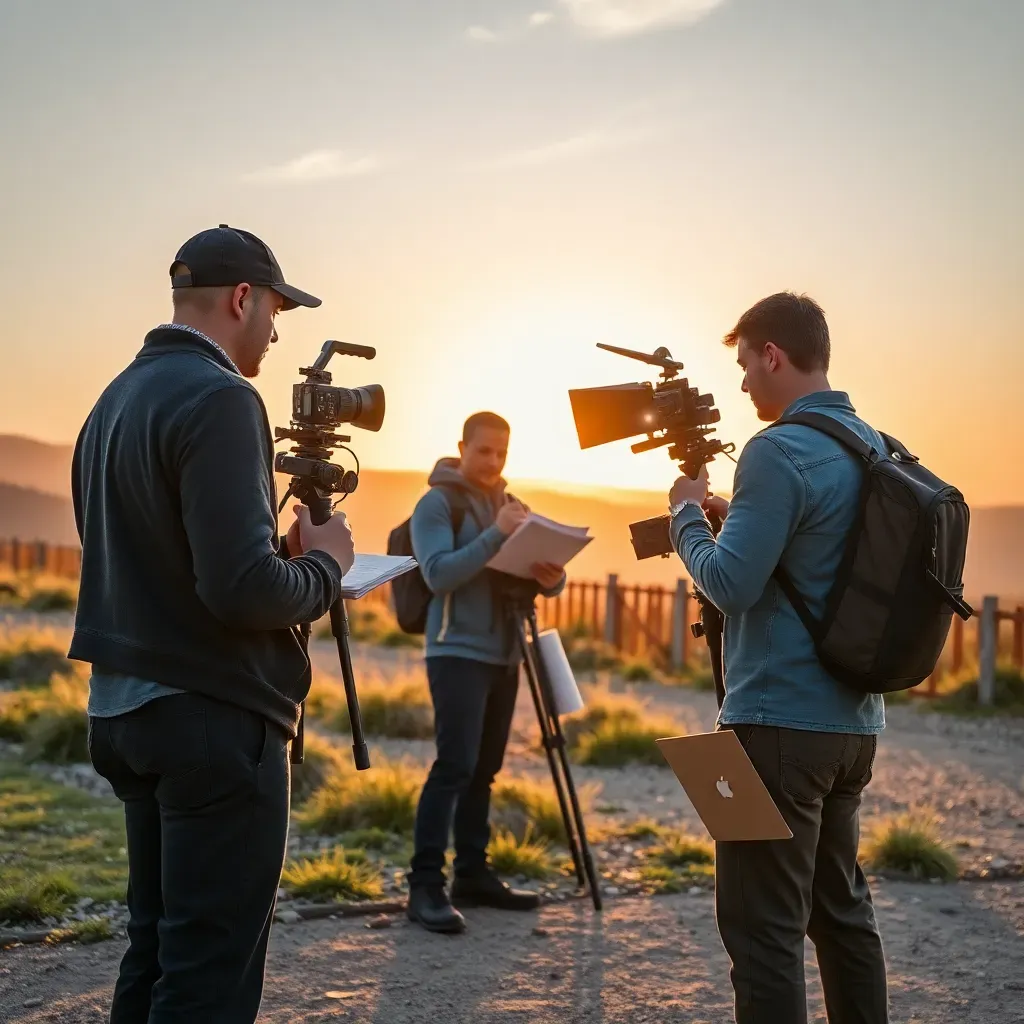
What Is a Film Fixer? Your Guide to Production Fixers in New Zealand
How film fixers help international productions shoot in Middle-earth and beyond — navigating the NZSPG incentive, DOC conservation permits, Weta-calibre post-production, and the ground-level realities of filming at the bottom of the world
A film fixer is a local production pro who transforms the idea of shooting in a distant country into a workable, budgeted, permitted reality. In New Zealand, that task carries a specific character. The country that gave the world Middle-earth operates a concentrated but top-tier production ecosystem: a single national incentive (the NZ Screen Production Grant) with generous rebates rates, a small but in tech top crew base hardened by decades of blockbuster work, conservation-covered landscapes that need Department of Conservation approval before a tripod touches the ground, and a geographic remoteness that makes advance planning not just advisable but key. Fixers working in New Zealand do not simply arrange transport and book hotels. They set up with the New Zealand Film Commission on incentive eligibility, guide shoots through council-level and DOC permitting across regions as different as downtown Auckland and the Fiordland backcountry, draw on crew networks rooted in the Lord of the Rings and Avatar pipelines, and manage the logistical realities of operating twelve time zones from most clients' home offices. This guide explains what fixers do, when you need one, how they compare to line producers and coordinators, what they cost, and how to find the right partner for your production in New Zealand.
As Fixers in New Zealand, we bring local expertise to international productions filming in New Zealand. Our team's deep knowledge of local regulations, crew networks, and production infrastructure ensures your project runs smoothly from pre-production through delivery.
ACT 01
What Is a Fixer?
The Local Expert Who Unlocks New Zealand for International Productions
A film fixer is a local production pro who sets up the logistical, regulatory, and cultural needs of global shoots in their area. In New Zealand, the role takes on distinctive dimensions. The country's production infrastructure punches far above its population of five million. Stone Street Studios in Wellington, Park Road Post Production, and Weta FX represent facilities that rival anything in Los Angeles or London. But the industry is compact, relationships matter a lot, and the distance from major markets means that a production without trusted local representation faces obstacles that no amount of remote planning can overcome.
- Fixers possess detailed knowledge of New Zealand's production scene — the NZSPG incentive structure, regional council permit needs, DOC access protocols, and crew availability across a small but deep talent pool
- They serve as the production's local representative with Film New Zealand, regional film offices like Screen Wellington and Screen Auckland, iwi (tribal) authorities, and local vendors
- New Zealand fixers operate in English, with many skilled in handling Te Reo Maori cultural protocols needed for filming at culturally major sites
- The role ranges from person freelance coordinators to full [shoot service firms](/services/) offering from start to finish support
The Origin of the Term in Film
The word 'fixer' came into the film industry from journalism, where foreign correspondents relied on local contacts to arrange access, translate conversations, and handle unfamiliar area. As global shoots expanded during the 1990s and 2000s — with New Zealand emerging as a top destination after the Lord of the Rings trilogy put the country on each location manager's radar — the role grew far beyond its journalistic origins. A journalist's fixer might arrange a single interview. A film fixer in New Zealand sets up months of shooting across a country where a helicopter is at times the only way to reach a location, where conservation rules can determine whether a shoot happens at all, and where the nearest replacement piece of gear may be a day's shipping away from Australia.
Individual Fixer vs Production Service Company
These terms describe different scales of support. A person fixer is mostly a freelancer who gives personal planning — logistics, local contacts, troubleshooting. A shoot service firm is a registered business offering full services: crew hiring through set up local networks, gear rental planning with New Zealand's pro vendors, accounting that meets NZSPG records standards, insurance, permits, and full production management. In a market as specialty as New Zealand's — where the crew community is tight-knit, the rebates scheme has specific qualifying-expenditure rules, and DOC permits need skilled handling — the shoot service firm model often gives the most reliable pathway for global shoots.
ACT 02
What Does a Fixer Do?
The Full Scope of a New Zealand Production Fixer's Responsibilities
A production fixer's work in New Zealand spans the full lifecycle of a shoot, from the earliest location research through to the final wrap logistics and incentive records. The scope tends to surprise visiting shoots, specific because New Zealand's compact size conceals genuine logistical complexity — rugged terrain, variable weather systems, conservation-access needs, and a crew market where key staff book out months in advance.
- [Filming permits](/services/pre-production/film-permit-acquisition/) — setting up with regional councils (Auckland Council, Wellington City Council, Queenstown-Lakes District Council) and the Department of Conservation for shoots in national parks, reserves, and conservation land
- [Crew sourcing](/services/film-crew/) — identifying and hiring local crew across all departments, drawing on a talent pool shaped by blockbuster shoots from Lord of the Rings through to Avatar and Mission: Impossible
- Gear — arranging rental from New Zealand-based vendors, setting up customs clearance and short-term importation for specialty gear not ready locally, and managing the lead times that geographic isolation demands
- [Location scouting](/services/pre-production/location-scouting-services/) — finding locations across New Zealand's extraordinary range of landscapes — volcanic plateaus, fjords, native bush, glaciers, black-sand beaches, and urban centres — while accounting for access logistics, weather windows, and permit feasibility
- NZSPG navigation — guiding shoots through the New Zealand Screen Production Grant application, making sure qualifying expenditure is structured and logged correctly from day one to secure the 20 percent global rebates (or 40 percent domestic grant) plus any applicable 5 percent uplift
- Cultural liaison — engaging with iwi when filming involves culturally major sites, waterways, or land with specific Maori heritage, making sure protocols are observed and relationships are built with respect
- Transport and lodging — organising car fleets, domestic flights, helicopter access for remote locations, and lodging in areas where options may be tight outside peak tourist season
- Budget management — building accurate local budgets in NZD, managing the exchange-rate considerations that affect global shoots, and preventing cost surprises caused by New Zealand's geographic premium on certain services
- Emergency problem-solving — handling weather disruptions, gear delays caused by shipping lead times, last-minute DOC conditions, and the kind of remote-location spares that come with filming in a mountainous island nation
Pre-Production: Building the Infrastructure
Before cameras roll in New Zealand, the fixer lays groundwork that sets whether the shoot delivers or derails. Location research here goes beyond visual suitability — a stunning valley in Fiordland may need a helicopter shuttle, DOC consent with conditions around wildlife disturbance, and a weather backup plan for a region that receives seven metres of annual rainfall. The fixer maps all of this before the production commits. They set up permit applications through regional councils, each of which operates its own processes and timelines, and through DOC for any conservation land. They source crew from a talent pool that is top-tier but finite — key roles like skilled gaffers, first ADs, and specialty camera operators book well in advance, and the fixer's relationships determine whether those positions are filled. They arrange gear rental, flagging items that may need to be imported from Australia and building in the shipping lead time. And they prepare the NZSPG records framework so that qualifying expenditure is tracked correctly from the first dollar spent.
Production: Managing the Shoot on the Ground
During filming, the fixer operates as the production's operational nerve centre in New Zealand. They liaise with council film offices and DOC rangers on location, manage relationships with landowners and local communities, set up crew logistics across a country where a three-hour drive between locations is routine, and solve problems as they surface. New Zealand's weather is notoriously changeable — four seasons in one day is a genuine phenomenon in many regions — and the fixer builds flexibility into each schedule. On remote shoots, they manage helicopter logistics, satellite communications where cell coverage drops out, and safety protocols for locations that involve genuine wilderness. For documentary shoots, fixers arrange access to Maori communities with cultural sensitivity, set up interviews with local subjects, and give the editorial context about New Zealand's social and site-level landscape that shapes the story being told.
Administrative Compliance and the NZSPG
The NZ Screen Production Grant is the primary financial incentive drawing global shoots to New Zealand, offering a 20 percent rebates on qualifying New Zealand production expenditure for global shoots, with a potential 5 percent uplift for shoots with major New Zealand content. Domestic shoots can access a 40 percent grant. The NZSPG is administered by the New Zealand Film Commission (NZFC) and has specific eligibility criteria, minimum-spend thresholds, and records needs that must be satisfied. The fixer sets up with local accountants and NZSPG pros to make sure each qualifying dollar is captured, that the production's corporate structure meets eligibility needs, and that all reporting is completed to the NZFC's standards. They also manage work visa applications for foreign crew through Immigration New Zealand, gear short-term importation through customs, and any iwi consultation needs that form part of DOC or council permit conditions.
ACT 03
When Do You Need a Fixer?
Five Scenarios Where a New Zealand Fixer Is Essential
New Zealand's production ecosystem is welcoming and well-organised. But its geographic isolation, compact crew market, and site-level protections mean that local expertise is not optional for most global shoots. The distance alone — twelve hours ahead of London, seventeen ahead of Los Angeles — makes real-time planning from abroad impractical.
- The production is shooting in New Zealand for the first time and needs to handle the NZSPG, council permits, and DOC needs
- You are planning to film on conservation land, in national parks, or at culturally major Maori sites
- The shoot involves remote or backcountry locations needing helicopter access, weather backup, and safety management
- The production needs to secure crew in a market where top talent books months ahead and personal relationships drive hiring
- The project involves substantial qualifying expenditure and the production wants to maximise the NZSPG rebates
Conservation Land and DOC Permits
Roughly a third of New Zealand's land area is managed by the Department of Conservation. Many of the country's most iconic filming locations. Milford Sound, Tongariro National Park, the Remarkables, Wanaka's lake and mountain landscapes — sit on conservation land. Filming on DOC-managed land needs a concession. The application process involves showing that the activity will not damage the natural environment, that appropriate restoration measures are in place, and that any relevant iwi consultation has occurred. Conditions can have restrictions on crew numbers, gear types, noise levels, and the hours during which filming is permitted. A fixer who has processed dozens of DOC concessions knows how to present the application, what conditions to expect, how to plan around them, and how to keep the relationship with DOC rangers on the ground so that future shoots stay welcome.
The Crew Availability Challenge
New Zealand's crew base is exceptionally skilled — many have worked on shoots with budgets exceeding half a billion dollars — but it is small relative to the demand that major global shoots create. When a large feature or series is in production at Stone Street Studios or Auckland Film Studios, the ready pool of skilled crew tightens significantly. A fixer with deep relationships in the New Zealand crew community knows who is ready, who is booked, and who can be brought back from working in Australia (a common pattern in the trans-Tasman production market). Without those relationships, a global shoots may find itself unable to fill key positions during peak periods, or hiring crew whose experience does not match the project's needs.
Remote Locations and Logistical Reality
New Zealand's landscapes are its greatest production asset. But many of the most spectacular locations are genuinely remote. Fiordland has no road access to many of its most dramatic settings. The volcanic interior of the North Island can involve hours of travel on unpaved roads. Coastal locations may be tidal-dependent. A fixer who has operated in these environments knows the logistics that visiting shoots underestimate: helicopter costs and availability, weather windows that close without warning, the need for satellite communications gear, safety protocols for working near glaciers or on exposed ridgelines, and the lodging constraints in regions where the nearest town may have tight options. These are not hypothetical concerns — they are the everyday reality of filming in New Zealand's backcountry. Getting them wrong can halt a shoot fully.
ACT 04
Fixer vs Line Producer vs Production Coordinator
Understanding the Role Boundaries in New Zealand
Global shoots frequently ask how a fixer differs from a line producer or production coordinator. In New Zealand's production environment — smaller and more relationship-driven than Hollywood or London — these distinctions shape how effectively a visiting production integrates with local infrastructure.
- A fixer gives local expertise, logistics, and problem-solving specific to New Zealand's regions, rules, and crew networks
- A line producer manages the overall shoot budgets, schedule, and operational execution across all locations
- A production coordinator handles administrative tasks — call sheets, travel bookings, forms, and crew communications
- On global shoots in New Zealand, all three roles often operate at once, with the fixer serving as the key bridge to local industry
Where the Roles Overlap and Diverge
The confusion is understandable because all three roles involve logistics and planning. A line producer on a domestic New Zealand production handles many tasks that a fixer would cover for a visiting global team — crew sourcing, budget work, vendor negotiations. The difference is embedded knowledge. A line producer flying in from London or Los Angeles does not have relationships with Screen Wellington or the Queenstown-Lakes film office, cannot call a DOC ranger they have worked with on six previous shoots, and does not know which of New Zealand's tight-knit crew community is ready this quarter. The fixer fills that gap. On smaller global shoots shooting for a few weeks, the fixer may effectively serve as the local line producer, managing all New Zealand operations while the overseas producer handles the wider project. On larger shoots — the kind that occupy Stone Street Studios for months — the fixer works alongside a dedicated line producer, giving local execution while the line producer manages the global picture.
Matching the Right Role to Your Production Scale
For a small documentary crew visiting New Zealand for a two-week shoot, a fixer alone is mostly enough — they handle permits, crew, DOC applications, gear, and logistics while the producer manages the project from abroad. For a mid-scale commercial shooting across Auckland and Queenstown, you likely need a fixer for local logistics plus a coordinator managing the administrative workflow. For a large feature or series setting up a production base at Auckland Film Studios or Stone Street, you need the full structure: a line producer overseeing the global budget, a production coordinator running administrative systems, and a local fixer or shoot service firm managing ground-level execution, NZSPG records, DOC compliance, and iwi liaison. The fixer's role scales with the production's ambition and complexity.
ACT 05
What Does a Fixer Cost?
Understanding Fixer Pricing in the New Zealand Market
Fixer costs in New Zealand reflect the country's specialty production market and the full nature of the services needed. While we do not publish specific rates — they differ too significantly by project to be meaningful — here is how pricing mostly works and what factors shape the investment.
- Person fixers mostly charge day rates in NZD that differ by region, experience, and production complexity
- Shoot service firms quote project-based fees covering the full scope of local planning, DOC permitting, and NZSPG compliance
- Full-service fees mostly represent a percentage of total local production spend
- The cost of not having a fixer — missed NZSPG rebates, DOC permit rejections, crew sourcing failures — almost always exceeds fixer fees on New Zealand shoots
Day Rate vs Project Fee
A person fixer charging a daily rate suits small shoots — a documentary crew of three to five people shooting for a few days, or a branded content team needing local support in Auckland. For anything larger, a shoot service firm delivers better value by bundling planning, crew sourcing, gear rental, NZSPG records, DOC permitting, and production management into a single relationship. In New Zealand specifically, where the NZSPG needs careful expenditure tracking and records, and where DOC concessions involve an application process that gains from skilled handling, the shoot service firm model gives advantages that a person freelancer may not be positioned to deliver.
What Drives Pricing in New Zealand
Several factors influence the investment: which regions you are shooting in (Auckland is straightforward. Fiordland involves helicopter logistics that multiply costs), the length across pre-production, production, and wrap, the scale of crew and gear being managed, the number and complexity of DOC and council permits needed, whether the shoot involves remote locations needing specialty transport and safety management, and the level of NZSPG compliance support needed. New Zealand's geographic isolation also affects gear costs — items not ready locally must be imported from Australia or further afield, adding shipping time and customs processing. The best way is to share your full project brief and receive a detailed, itemised quote in NZD.
The ROI Argument in New Zealand
The return-on-investment case for a fixer in New Zealand extends well beyond preventing delays. The most tangible financial inputs is mostly NZSPG tuning. The grant gives a 20 percent rebates on qualifying expenditure for global shoots, with a possible 5 percent uplift — sums that can represent hundreds of thousands or millions of dollars on a large shoot. Productions that fail to structure their expenditure correctly, that miss records needs, or that do not meet eligibility criteria risk leaving that money unclaimed. A qualified fixer makes sure the production's NZSPG application is sound from the outset. Beyond incentives, fixers save money through their knowledge of competitive local pricing, their crew relationships that prevent costly schedule disruptions, and their ability to build realistic budgets that account for New Zealand's geographic premium on logistics.
ACT 06
How to Choose a Fixer
Six Criteria for Selecting the Right New Zealand Production Partner
New Zealand's production community is small enough that reputation travels fast and relationships matter deeply. Choosing the right fixer is a decision that affects not just your today's shoot but your standing in a market where word-of-mouth carries real weight.
- Proven experience with shoots of similar scale and format to yours, with verifiable credits in New Zealand
- A registered New Zealand business with production insurance, clear contractual terms, and transparent pricing in NZD
- Set up relationships with the NZFC, Film New Zealand, Screen Wellington, Screen Auckland, and DOC regional offices
- Shown competence with NZSPG applications, DOC concessions, and council-level permitting processes
- References from recent global shoots that you can contact directly
- Understanding of Maori cultural protocols and experience liaising with iwi on location access
Evaluating New Zealand Experience
Ask for a production list and examine which regions the fixer has worked in and what types of shoots they have supported. New Zealand's geography means that experience in Auckland does not automatically translate to competence in the South Island backcountry. A fixer who has set up large-scale shoots in Queenstown and Fiordland brings different expertise from one who specialises in urban commercial work in Wellington. Look for experience with shoots similar to yours in scale and format. Request references and contact them directly, asking about the fixer's problem-solving under pressure, their accuracy in budget work, their DOC and council relationships, and whether the referring production would work with them again. In a community this small, reputation is the most reliable indicator of quality.
Infrastructure and Compliance Capability
In the New Zealand market, a fixer's administrative skill matters as much as their creative and logistical instincts. Can they handle the NZSPG application process and the ongoing expenditure records it needs? Do they have set up relationships with DOC concessions staff and regional council film offices? Can they manage payroll in compliance with New Zealand employment law? Do they carry appropriate production insurance and operate as a registered New Zealand business? These are not optional considerations in a market where the rebates scheme, conservation rules, and employment standards all carry real compliance weight. A fixer who cannot show this infrastructure is not equipped to support a pro global shoots here.
Testing the Relationship Early
The first inquiry and quoting process is your clearest preview of the working relationship. Does the fixer ask substantive questions about your project — shooting regions, crew needs, DOC implications, NZSPG strategy — or do they quote a figure without knowing the scope? Do they raise potential complications you had not considered, such as seasonal weather risks in the Southern Alps, crew availability during peak production periods, or the lead time needed for DOC concessions in popular locations? The best New Zealand fixers will give candid assessments: telling you a specific location is impractical in winter, suggesting an alternative region that gives similar production value with simpler logistics, or flagging that your preferred shooting dates coincide with a large production that will absorb much of the ready crew. That kind of honest, informed guidance is what separates a local contact from a genuine production partner.
ACT 07
Real-World Examples of Fixers in Action
How Production Fixers Solve Problems on New Zealand Shoots
The value of a fixer comes into sharpest focus through practical examples. Here are three anonymised scenarios drawn from our experience that illustrate what a production fixer adds to a global shoot in New Zealand.
- DOC concession rescue: securing last-minute conservation-land approval when a production's first application was rejected for not enough site-level assessment
- Remote crew deployment: mobilising a full crew and gear to a backcountry location easy to reach only by helicopter, with a three-day weather window
- Cultural protocol navigation: facilitating iwi buy-in for a production filming at a site of deep Maori weight
The DOC Concession Crisis
A European feature production had set their heart on a sequence in a national park in the South Island. They had submitted a DOC concession application independently. But it was returned with a request for an a lot more detailed site-level impact assessment than the production had expected. With the shoot date six weeks away and the application stalled, they engaged our fixer. Drawing on experience with dozens of previous DOC applications, the fixer identified exactly what the concession team needed — a detailed plan addressing plant cover protection, waste management, noise limits near wildlife habitats, and crew movement protocols. They prepared the revised submission, set up directly with the DOC regional office to clarify conditions, and secured approval with three weeks to spare. The fixer also negotiated conditions that were more practical for the production than the standard template — allowing an extra hour of golden-hour filming in exchange for a stricter crew-number cap during midday — because they understood which conditions DOC was firm on and which were negotiable.
Backcountry Crew Mobilisation
A documentary production needed to film in a remote river valley in Fiordland with no road access. The weather forecast showed a three-day window of clear conditions before a week of rain would make the location unflyable. Our fixer had seventy-two hours to assemble a crew, secure gear, arrange helicopter transport, set up a short-term base camp with power and shelter, and set up the flight schedule around the ready daylight hours. They drew on relationships with local crew who had backcountry filming experience — not all crew are comfortable or safe operating in genuine wilderness conditions — sourced lightweight gear rigs that could be transported by helicopter undersling, arranged a staging area at the nearest easy to reach airstrip, and built a schedule that accounted for the thirty-minute flight time each way. The crew was on location within forty-eight hours and filmed for two full days before extracting ahead of the incoming weather system. Without a set up local network and backcountry logistics experience, the production window would have been missed fully.
Navigating Iwi Engagement
A global shoots wanted to film at a coastal location in the North Island that held deep cultural weight for the local iwi. The production team had made a first way directly. But without knowing the protocols around buy-in, the nature of the site's weight, or the appropriate channels for discussion. The response was understandably cautious. Our fixer, who had an existing relationship with the iwi through previous shoots, facilitated a proper introduction. They arranged a hui (meeting) where the production team could explain their project in person, listen to the iwi's concerns and conditions, and show genuine respect for the site's cultural importance. The fixer advised the production on appropriate koha (a gift acknowledging the relationship), made sure the script treatment was shared in advance so the iwi understood how the location would be depicted, and helped negotiate filming conditions that had an iwi cultural advisor on set during all shooting days. The production gained access they would not have secured on their own. The footage — informed by the cultural context the iwi given — carried an authenticity that enriched the final film.
ACT 08
Common Questions
What is a fixer in the film industry?
A fixer in the film industry is a local production professional who coordinates and facilitates international film, television, and media productions shooting in their country or region. They handle logistics including filming permits, crew sourcing, equipment rental, location scouting, translation, transportation, and government liaison. The role originated in journalism and was adopted by the film industry as international production expanded. In New Zealand, fixers also navigate the NZSPG incentive programme, Department of Conservation concessions, and Maori cultural protocols for filming at significant sites.
What does a film fixer do?
A film fixer manages the full range of local logistics for international productions. In New Zealand, this includes coordinating with regional councils and the Department of Conservation for filming permits, sourcing crew from a talent pool shaped by blockbuster productions like Lord of the Rings and Avatar, arranging equipment rental and managing imports for gear not available locally, scouting locations across the country's diverse landscapes, navigating the NZSPG rebate programme, facilitating iwi engagement for culturally significant locations, managing budgets in NZD, organising transport including helicopter access for remote areas, and solving problems from sudden weather changes to equipment shipping delays.
How much does a fixer cost?
Fixer costs in New Zealand vary based on the regions involved, production scale, duration, and scope of services. Individual fixers charge day rates in NZD that differ by experience and complexity, while production service companies quote project-based fees covering full local coordination, DOC permitting, and NZSPG documentation. In New Zealand specifically, the fixer's financial contribution often extends well beyond logistics — proper NZSPG structuring and documentation can recover 20 to 25 percent of qualifying expenditure. The most accurate way to understand costs is to share your full project brief and receive a detailed, itemised quote.
What's the difference between a fixer and a line producer?
A fixer provides local expertise, logistics, and problem-solving specific to a particular country or territory. A line producer manages the overall production budget, schedule, and operational execution. In New Zealand's compact production community, these distinctions matter because a line producer from abroad lacks the established relationships with Screen Wellington, DOC regional offices, or the local crew network that determine whether a shoot runs smoothly. A line producer flying in from London cannot call the DOC ranger they have worked with previously or book a gaffer who is about to commit to another production. On large New Zealand shoots, both roles work in parallel: the line producer manages the global picture while the fixer handles local execution, NZSPG compliance, and ground-level coordination.
Do I need a fixer for a small shoot?
Even small productions benefit significantly from a fixer when shooting in New Zealand. The country's geographic isolation means that advance planning is more critical than in easily accessible markets — equipment may need to be imported, crew availability is limited, and DOC concessions for conservation-land locations require lead time. A fixer adds value through permit coordination, crew sourcing in a small but competitive market, NZSPG guidance even at modest spend levels, and the local knowledge that prevents costly surprises in a country where weather, remoteness, and access logistics can disrupt a schedule without warning. The cost of a fixer for a small New Zealand production is modest relative to the risks of operating without one.
How do I find a fixer in New Zealand?
The most reliable way to find a fixer in New Zealand is through established production service companies with a registered local presence, verifiable track record, and production insurance. Film New Zealand and regional screen offices — Screen Wellington, Screen Auckland — maintain directories of qualified service providers. The New Zealand Film Commission can also provide guidance for productions applying for the NZSPG. When evaluating candidates, confirm their experience in the specific regions you plan to shoot, check references from recent international productions, verify their NZSPG and DOC permitting capabilities, and ensure they operate as a registered New Zealand business. Our team provides comprehensive fixer and production services across New Zealand with local expertise in every region from Auckland to Fiordland.
Ready to Roll
Need a Fixer for Your Next Production in New Zealand?
Whether you are planning a documentary, feature film, commercial campaign, or a blockbuster taking advantage of New Zealand's world-class crews and landscapes, our team provides comprehensive fixer and production services across the country. We handle permits, DOC concessions, crew, equipment, NZSPG documentation, iwi liaison, and every other logistical detail so you can focus on the creative work that matters. Contact Fixers in New Zealand to discuss your next project.